Personalized Medical Care & Dedicated International Patient Concierge


Medical Guide
What to Bring to Your First Plastic Surgery Consultation
A practical packing list for consultation day at TAE Plastic Surgery in Busan: identification, medication list, priorities, and what is better left home.
Schedule a ConsultationWhat to Bring to Your First Plastic Surgery Consultation
Medically reviewed by Dr. Kim Ki-Tae, Board-Certified Specialist in Plastic Surgery, issued by the Korean Society of Plastic and Reconstructive Surgeons
Most people searching for what to bring to plastic surgery consultation appointments find a vague list of documents and stop there. That misses the point of the exercise. The items you carry into the room on the day are not paperwork for its own sake; each one either widens or narrows what the visit can actually settle. A forgotten medication name turns a specific plan into a provisional one. A pair of contact lenses can stand between a surgeon and a clear look at the skin being discussed.
This article is about the physical, logistical things worth having with you when you walk into TAE Plastic Surgery Clinic at 4th Floor, Gunam Building, 27 Gunam-ro, Haeundae-gu, Busan. It is deliberately practical. It covers what goes in the bag, why each item changes the shape of the conversation, and the two things that are better left at home.
Why a packing list is really a planning list
An in-person consultation is a finite block of time in which several different kinds of work happen at once. The surgeon is gathering history, examining tissue, forming an impression, and explaining it to you. You are absorbing an assessment you may not have expected and deciding how you feel about it.
Anything you have to reconstruct from memory in that room competes with that work. Anything you brought with you does not. That is the entire logic behind the list that follows, and it is why the Agency for Healthcare Research and Quality, the federal agency that publishes patient-preparation tools for US patients, frames appointment preparation as something to be done before the visit rather than inside it.
Identification and getting through the door
Your passport or photo identification
Bring your passport. If you are traveling from the United States it is the identification you already have with you, and it is the document that matches the name on whatever correspondence arranged the appointment. Keep it somewhere you can reach without emptying your bag.
A photograph of the passport page on your phone is a useful backup for your own reference, but it is a backup rather than a substitute. Carry the document itself.
The appointment details, and the 4th floor
Have the appointment date and time written down somewhere that does not depend on a working data connection — a screenshot, a note saved offline, a line in a notebook. Arriving in an unfamiliar city with the confirmation locked inside an email you cannot load is a common and entirely avoidable problem.
The clinic sits on the 4th floor of the Gunam Building on Gunam-ro in Haeundae-gu. Save the address in the script a local driver can read, and allow more time than the map suggests. Haeundae traffic and the walk from a subway exit both take longer than an app estimate on a first visit. Plan around the clinic's working day as well: weekdays run from 9:00 a.m. to 6:00 p.m. with a lunch break from 1:00 p.m. to 2:00 p.m., Saturdays run from 9:00 a.m. to 1:00 p.m., and the clinic is closed on Sunday. An appointment sitting close to either side of the lunch break is one you want to reach early rather than exactly on time. If anything about the arrangement is unclear before you travel, the clinic's enquiry page is the route for sorting it out in advance.
The documents you assembled beforehand
Your written medication list
Write down every prescription medication you take, with the dose and how often you take it. Add supplements, vitamins, and anything herbal. Add over-the-counter medicines you use regularly, including anything you take for pain or inflammation. Note allergies and what the reaction was.
This matters more in a surgical consultation than in most medical appointments, because preparation instructions at TAE Plastic Surgery are built around exactly this information. The clinic's documented preparation guidance involves stopping blood-thinning medication and supplements roughly one to two weeks ahead, avoiding anti-inflammatory drugs, and avoiding smoking and alcohol, with fasting where anesthesia applies and routine pre-operative blood tests completed beforehand. Its guidance also asks patients with chronic conditions or regular medication to raise them at consultation so the plan can be adjusted individually. None of that can be tailored to you from a half-remembered list.
The Agency for Healthcare Research and Quality's QuestionBuilder tool exists partly for this reason: it lets you record your medications before the appointment, including by photographing the bottles, so the information arrives complete rather than approximate. Photographs of your actual packaging are a reasonable substitute for a typed list, and better than either is having both.
The records you gathered
If you have had previous surgery in the area under discussion, previous imaging, or operative notes, bring the copies. How to decide which records matter and how to request them is its own task, covered separately in this series, so the only thing to say here is that the copies belong in the bag rather than in an inbox you are hoping to reach from the waiting room.
Both the American College of Surgeons, in its statement on medical and surgical tourism, and the Centers for Disease Control and Prevention, in its Yellow Book guidance on medical tourism, make the same underlying point about care that crosses a border: the record has to travel with the patient, because the systems holding it do not talk to each other. Paper copies and offline files both work. Something that only exists behind a login does not.
The list you write yourself
Your questions, and your priorities in order
Write your questions down before you go. This is the single item on the list that most reliably changes what a consultation achieves, and it is the one most people skip.
Then do the part that matters more: put them in order. Number them, or mark the three you most need answered. A consultation is finite, and a conversation that runs out of time answers the questions you asked first. If your deepest worry is the one you were saving for the end, there is a real chance it never gets asked at all. The Agency for Healthcare Research and Quality's "Questions Are the Answer" materials make prioritizing the list an explicit step rather than an optional refinement, and that is the reason why.
If you are not sure what belongs on the list, the American Academy of Dermatology publishes guidance on the questions worth asking before any cosmetic treatment, covering who performs the procedure, what training they have, what the realistic range of results is, and what the risks and possible side effects are. The American Society of Plastic Surgeons takes a similar line in its patient safety material, treating an informed, question-asking patient as one of the conditions for a good outcome rather than as an inconvenience.
Leave space under each question. You are going to want to write in it.
A way to take notes, and a charger
You will not remember the answers. Nobody does. A consultation delivers a dense block of new information, some of it emotionally loaded, and recall afterward is unreliable in a way that has nothing to do with intelligence or attention.
Bring a notebook and a pen, or plan to type. Whichever you choose, bring a charger and an adapter for Korean sockets, because a phone that is also your map, your appointment record, your notebook and your camera will not survive the day on a morning charge.
There is a related technique worth using inside the room. The Agency for Healthcare Research and Quality promotes what it calls teach-back — the practice of restating what you have just been told in your own words, so any misunderstanding surfaces immediately rather than three weeks later. Saying "so what I am hearing is..." out loud is not rude. It is the most efficient error-check available to you.
The people and the practicalities
A companion, if you have one
If someone is traveling with you, bring them. A second person hears things you miss, remembers the part you lost, and is a steadier judge of your own reaction than you are in the hour afterward. Federal patient-preparation guidance routinely suggests bringing a family member or friend to help remember what was discussed, and it is sound advice in any appointment where the information volume is high.
If you are traveling alone, compensate deliberately: write more, and plan a quiet half-hour afterward to fill in the gaps while the conversation is still fresh.
Glasses rather than contact lenses
If the area around your eyes is part of the discussion, wear glasses and leave the contact lenses out. An assessment of the periorbital region involves looking directly at the eyelids and the skin around them, and lenses are an obstacle that has to be removed anyway.
The reason this region gets examined so closely is anatomical. The clinic's stated position is that the skin around the eye is thin and carries a dense concentration of blood vessels and nerves, so eye shape, the amount of fat, and skin thickness are assessed together rather than separately. That is a physical examination, and it works better without a layer of plastic on the cornea and without the reflex of avoiding bright light.
Clothing that opens rather than pulls over your head
Wear something that unbuttons or unzips. If any part of the consultation involves examining the neck, chest, or body, clothing that opens at the front makes that straightforward; a fitted top that has to come off over your head makes it awkward, and awkwardness shortens examinations.
Keep makeup light or skip it. Skin is easier to assess when it is not being looked at through foundation.
Something to tie your hair back
A hair tie or clip is a small thing that solves a recurring problem. Facial assessment, photography for the record, and any examination of the hairline all work better with hair off the face. If you have long hair, carry two — one will be lost.
What to leave at home
Expectations built from someone else's photographs
There is a difference between bringing reference images to explain what you like and bringing a photograph of a specific person as a target. The first is useful communication about direction and taste. The second imports a face with different bone structure, different skin thickness, different fat distribution and a different starting point, and then measures your consultation against it.
If you bring images, bring them as vocabulary rather than as a specification. The most useful thing you can say about a photograph is which quality in it appeals to you, not that you want that result.
A decision you are unwilling to have changed
The most counterproductive thing you can carry into a first consultation is a fixed conclusion about which procedure you are having, held firmly enough that an examination cannot move it.
An in-person assessment exists to find the structural cause of the thing that bothers you. Sometimes that cause is not what a website led you to expect, and the appropriate approach is a different one. If your mind is closed to that, you have traveled a long way for an assessment and then turned it into a formality. Bring your goal — what you want to look different, in your own words — and stay genuinely open about the route there. Some background on how the practice approaches that kind of assessment is set out on its clinic background page.
Packing it the night before
Do this the evening before rather than in the morning. Passport, appointment details saved offline, medication list, record copies, prioritized questions, notebook and pen, charger and adapter, glasses, hair tie. Wear the clothes that open.
It takes ten minutes and it is the difference between a consultation that settles things and one that ends with a list of information you will now have to send later.
The Bottom Line
- Bring your passport, a printed copy of your appointment details, and the clinic's address for the 4th floor of the Gunam Building on Gunam-ro in Haeundae-gu, Busan.
- Bring a written medication and supplement list with doses and allergies; TAE Plastic Surgery's preparation guidance on blood thinners, anti-inflammatory drugs, and chronic conditions is built around that information.
- Write your questions down and rank them, because a consultation that runs short answers the questions you asked first.
- Bring a companion if you can, a charger and a way to take notes, glasses instead of contacts, clothing that opens at the front, and a hair tie.
- Leave behind a target photograph of someone else's face and any decision you are not willing to have changed by an examination.
Frequently Asked Questions
Do I need to bring my passport to a consultation?
Yes, bring it. It is the photo identification you already carry when traveling and the one that matches the name used to arrange the appointment. A phone photograph of the page is a useful backup, not a replacement.
What if I cannot remember all my medications?
Photograph the packaging of everything you take, including supplements and over-the-counter medicines, and bring the images. The Agency for Healthcare Research and Quality's QuestionBuilder tool is designed around exactly this method. An accurate list matters because preparation instructions depend on it.
Should I bring photographs of results I like?
They can help, but use them as vocabulary rather than as a target. Describe which quality in an image appeals to you. A specific person's face carries their anatomy, not yours, and it cannot function as a specification.
Is it worth bringing someone with me?
If you have the option, yes. A second person hears what you miss and remembers what you lose, and patient-preparation guidance widely recommends it. If you are alone, take fuller notes and set aside quiet time straight afterward.
Why glasses instead of contact lenses?
If the eye area is being discussed, it needs to be examined directly, and lenses come out for that anyway. The clinic describes the area around the eye as thin-skinned and densely supplied with vessels and nerves, so it is assessed closely.
What should I wear?
Something that unbuttons or unzips rather than pulls over your head, with light or no makeup, and bring a hair tie. Clothing that opens makes any examination of the neck, chest, or body simpler, and bare skin is easier to assess accurately.
How early should I arrive?
Earlier than the map suggests. Give yourself margin for traffic in Haeundae and for finding the building and the 4th floor on a first visit. Note that the clinic closes for lunch between 1:00 p.m. and 2:00 p.m.
What is the one thing most people forget?
Ranking their questions. Almost everyone writes a list; far fewer decide which three matter most. That ordering determines what gets answered if the conversation runs shorter than you hoped.
This article is for general informational purposes and does not constitute individualized medical advice, and it is not a self-diagnosis tool. Candidacy, technique, and expected outcomes can only be determined through a consultation with a qualified plastic surgeon.
More Articles
Continue reading our clinical guides.
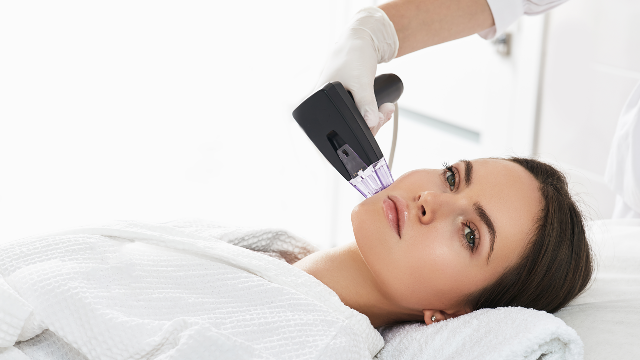
XERF Skin Tightening Korea: Dual Radiofrequency Depth
XERF skin tightening in Korea uses two monopolar radiofrequencies at 6.78 MHz and 2 MHz with three-stage depth control. How it works at TAE in Busan.
Learn More
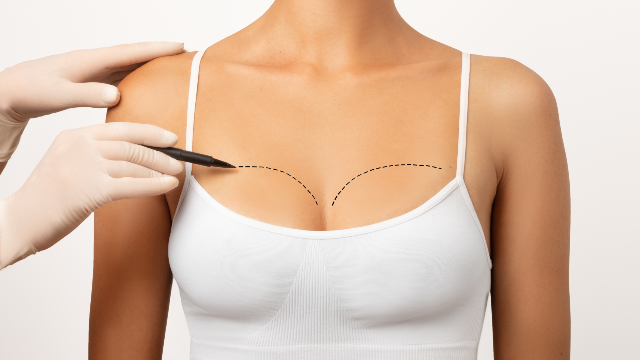
Trinity Breast Surgery Korea: A Combination Approach
Trinity Breast Surgery at TAE Plastic Surgery Clinic combines customized implant selection with fat transplantation and contouring in one surgical plan.
Learn More
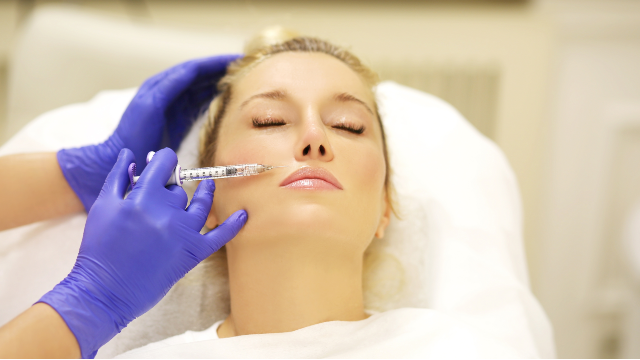
Skin Booster Korea: Matching the Booster to Your Skin
Skin booster Korea explained: how boosters differ from fillers, what the DoubleTite RF-plus-booster approach involves, and how the product is selected.
Learn More