Personalized Medical Care & Dedicated International Patient Concierge


Medical Guide
Plastic Surgery in Korea: Planning the Trip From Seattle
A Seattle guide to planning plastic surgery in Korea: what a shorter Pacific crossing really buys you, the time shift it does not fix, and the return leg.
Schedule a ConsultationPlastic Surgery in Korea: Planning the Trip From Seattle
Medically reviewed by Dr. Kim Ki-Tae, Board-Certified Specialist in Plastic Surgery, issued by the Korean Society of Plastic and Reconstructive Surgeons
People researching plastic surgery Korea from Seattle almost always run into the same piece of folklore: that the Pacific Northwest is unusually close to Asia, so a surgical trip from here is somehow easier than it would be from anywhere else in the country. There is a kernel of truth in it. There is also a lot that the kernel does not cover, and the gap between the two is where trips get planned badly. This article takes the myth apart piece by piece, then rebuilds it into something you can actually put on a calendar.
The grain of truth in "close to Asia"
Look at a globe rather than a flat map and the claim makes sense. Great-circle routes between North America and East Asia arc north, and a departure point in the upper left corner of the mainland sits closer to that arc than one in the south or east. Seattle genuinely is among the shorter mainland crossings to Korea. Less time in a pressurized cabin is a real benefit, and if you find long flights physically punishing it is not a trivial one.
What it is not is a shortcut through the rest of the trip. Distance shortens one variable only: how many hours you spend in the seat. It does nothing to the calendar that actually governs a surgical trip, and treating it as though it does is how people end up booking a return date they later have to change.
Shorter flight, identical time shift
Here is the part the folklore gets wrong. Flight length and time-zone displacement are separate quantities. Busan runs nine hours ahead of Coordinated Universal Time year-round. Seattle sits seven hours behind it during daylight saving time and eight hours behind it in winter, which puts Korea sixteen or seventeen hours ahead of your home clock depending on the month. Shaving hours off the flight does not shave hours off that gap. You arrive with the same displacement a traveler from the East Coast carries, in slightly less elapsed time.
The Centers for Disease Control and Prevention describes jet lag in its Yellow Book as a mismatch between the traveler's internal clock and the local clock at the destination, produced by rapidly crossing multiple time zones, with symptoms including disturbed sleep, daytime fatigue, impaired concentration and gastrointestinal upset. The CDC notes that eastward travel is generally the harder direction to adjust to, because advancing the body clock is more difficult than delaying it. The National Heart, Lung, and Blood Institute explains that the body's circadian rhythms are roughly twenty-four-hour internal cycles that govern sleep, alertness and hormone release, and that they resynchronize to a new schedule gradually rather than instantly.
Put plainly: you can be the passenger with the shortest crossing on the aircraft and still be the passenger whose body thinks it is the middle of the night when the consultation starts.
The calendar belongs to the procedure
This is the correction that matters most. The length of your trip is not derived from the flight. It is derived from the surgical plan — what is being done, how it is being done, and what has to be checked before you travel again.
A cosmetic operation carries a sequence of its own: the in-person assessment, the procedure, the early recovery period when swelling and bruising are at their most visible, any dressing or suture care, and at least one review appointment at which the surgeon looks at how the tissue is settling. Those items are set by clinical judgment. None of them shortens because your outbound flight was three hours less than someone else's.
Nor is the sequence the same for everyone. The American Society of Plastic Surgeons, in its patient safety material, stresses that candidacy, technique and the course of recovery are individual matters established with a qualified surgeon rather than assumed in advance. The honest answer to "how long will I need" is that the surgeon who examines you supplies it, and that any number you carry into the consultation from the internet is a guess you should be willing to discard.
Two practical consequences follow. First, do not buy a fixed, unchangeable return before you have a plan. Second, ask the clinic what the review schedule looks like for the specific operation you are considering, and build the trip around that answer instead of around the flight.
Why the return leg is the one to worry about
Most people plan the outbound carefully and treat the journey home as an afterthought. For a surgical trip it is the other way round.
On the outbound you are healthy. You can absorb a bad night, a long immigration queue, a delay. On the return you are a post-operative patient carrying swelling, possibly discomfort, possibly restrictions on lifting, and you are doing it across sixteen or seventeen hours of displacement in the direction that happens to be kinder to the body clock but no kinder to the tissue. The flight may be shorter than average, but the passenger is in a different state.
Two things deserve attention before you book it.
The first is clearance. Whether you are fit to fly after a procedure is a clinical decision, not a scheduling one. Raise it explicitly at consultation and ask what would cause the surgeon to want you to stay longer.
The second is circulation. The CDC's travel health guidance identifies long-haul flights as a setting in which the risk of deep vein thrombosis — a clot forming in a deep vein, usually in the leg — is increased by prolonged immobility, and notes that recent surgery is itself among the recognized risk factors for clot formation. The agency's general advice for travelers on long flights includes moving about the cabin where it is safe to do so and exercising the calf muscles while seated. Because recent surgery and long-haul travel can appear together in your itinerary, this is a conversation to have with your surgeon rather than a checklist to apply on your own.
Arriving, and the week you land into
Whatever the flight did to you, the first working day in Korea has a shape. TAE Plastic Surgery Clinic keeps consultation hours Monday through Friday from 9 a.m. to 6 p.m., with a lunch break from 1 p.m. to 2 p.m., and a shorter Saturday from 9 a.m. to 1 p.m. It does not open on Sunday. If you land late in the week, the closed Sunday sits in the middle of your plans, and a Monday appointment may mean two nights in the city before anything clinical happens.
There is a quiet advantage in that. A day of daylight and normal meal timing before your appointment is not wasted time; it is the beginning of adjustment. The CDC notes that exposure to light at the destination and adopting local sleep and meal schedules are the main levers travelers have for shifting the body clock, and that not every remedy suits every person — melatonin and sleep medication carry their own considerations and are worth raising with your own physician before you leave.
Where this clinic sits in the plan
TAE Plastic Surgery Clinic operates from the fourth floor of the Gunam Building at 27 Gunam-ro in Haeundae-gu, Busan. Its work spans eye plastic surgery, facial lifting and anti-aging treatment, breast plastic surgery, body contouring and liposuction, and skin and laser procedures including Renuvion tightening and HALO laser treatment.
Dr. Kim Ki-Tae is the clinic's only doctor. He holds the designation of Board-Certified Specialist in Plastic Surgery issued by the Korean Society of Plastic and Reconstructive Surgeons. The clinic's Korean business registration number is 617-31-90658, and it is listed nationally as an institution that treats international patients.
The American College of Surgeons, in its statement on medical and surgical tourism, advises patients traveling abroad for an operation to establish the qualifications of the surgeon and the standards of the facility before committing, and to arrange for continuity of care on return home. That is a reasonable standard to apply to any clinic you shortlist, including this one. You can read more about the practice on the clinic's about page, and questions about scheduling or what to prepare go through the contact page.
Before you commit to dates
A workable sequence looks less like booking a vacation and more like assembling a medical appointment that happens to involve an airport.
Start with the consultation, not the flight. Establish what is proposed and what the follow-up requires. Then work outward: the arrival date that gives you a usable day before the appointment, the departure date that sits safely after the last review, and only then the tickets. Keep the return flexible if your fare allows it.
Guidance published by the U.S. Department of State tells anyone going overseas to keep medication in its original labeled packaging alongside a copy of the prescription, to verify the rules covering any drug they plan to bring with them, and to have their own health record within reach while they are away from home. Bring the list of everything you take, including supplements — it matters at the pre-operative assessment, where the clinic asks patients to raise chronic conditions and regular medication so the plan can be adjusted, and where routine pre-operative blood tests are completed.
The Bottom Line
- A Pacific Northwest departure is genuinely one of the shorter mainland crossings to Korea, but the only thing it shortens is time in the seat.
- The time difference is unaffected by flight length: Busan runs nine hours ahead of Coordinated Universal Time, putting it sixteen or seventeen hours ahead of Seattle depending on the season.
- The length of the trip is set by the surgical plan and the follow-up schedule, which only the surgeon who examines you can define.
- Plan the return leg with more care than the outbound, and treat fitness to fly as a clinical question raised at consultation.
- TAE Plastic Surgery Clinic is closed on Sunday and keeps a shorter Saturday, so the day you land shapes when your first appointment can happen.
Frequently Asked Questions
Does a shorter flight mean a shorter recovery?
No. Flight duration and recovery are unrelated. Recovery is governed by the procedure performed and by how your tissue responds to it, which the operating surgeon assesses in person. A shorter crossing may leave you less tired on arrival, but it has no bearing on the healing timetable.
How far ahead of Seattle is Busan?
Busan sits nine hours ahead of Coordinated Universal Time throughout the year. Seattle observes daylight saving time for part of the year and standard time for the rest, so the gap is sixteen hours in the summer months and seventeen in the winter. Check the current offset when you book, because the two locations change clocks on different dates.
Should I plan a rest day before the consultation?
It is worth considering. The Centers for Disease Control and Prevention notes that daylight exposure and adopting local meal and sleep times help the body clock resynchronize, and a day of both before a detailed medical conversation is useful. Your appointment date is set with the clinic, so raise the idea when you arrange it.
Is jet lag worse flying west to Asia or coming home?
The Centers for Disease Control and Prevention reports that eastward travel is generally harder to adjust to than westward travel, because shifting the body clock earlier is more difficult than delaying it. That makes the journey home the tougher adjustment for a traveler from the Pacific Northwest. It is also the leg you make as a post-operative patient, which is why it deserves planning attention.
What should I ask about flying home after surgery?
Ask when the surgeon expects you to be fit to travel, what would delay that judgment, and what to do if a problem appears after you land. Also ask about movement and circulation on the flight itself, since the Centers for Disease Control and Prevention lists recent surgery among the recognized risk factors for clots during long-haul travel. These are clinical questions, so they belong in the consultation rather than in a travel forum.
When can I reach the clinic from a Pacific time zone?
The clinic's working day runs from 9 a.m. to 6 p.m. Monday through Friday, with a lunch break from 1 p.m. to 2 p.m., and from 9 a.m. to 1 p.m. on Saturday. Against a sixteen- or seventeen-hour offset, that window corresponds to your late afternoon and evening of the previous day. Written enquiries through the contact page sidestep the arithmetic entirely.
This article is for general informational purposes and does not constitute individualized medical advice, and it is not a self-diagnosis tool. Candidacy, technique, and expected outcomes can only be determined through a consultation with a qualified plastic surgeon.
More Articles
Continue reading our clinical guides.
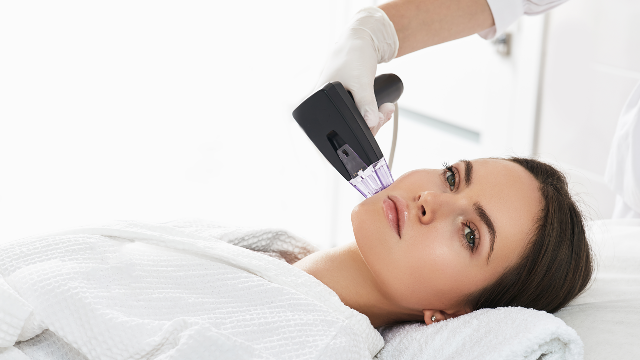
XERF Skin Tightening Korea: Dual Radiofrequency Depth
XERF skin tightening in Korea uses two monopolar radiofrequencies at 6.78 MHz and 2 MHz with three-stage depth control. How it works at TAE in Busan.
Learn More
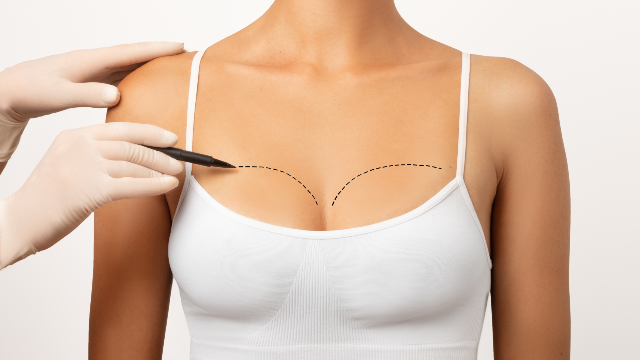
Trinity Breast Surgery Korea: A Combination Approach
Trinity Breast Surgery at TAE Plastic Surgery Clinic combines customized implant selection with fat transplantation and contouring in one surgical plan.
Learn More

Skin Booster Korea: Matching the Booster to Your Skin
Skin booster Korea explained: how boosters differ from fillers, what the DoubleTite RF-plus-booster approach involves, and how the product is selected.
Learn More