Personalized Medical Care & Dedicated International Patient Concierge

Medical Guide
Plastic Surgery in Korea: A Los Angeles Travel Guide
A Los Angeles guide to plastic surgery in Korea: what a nonstop Pacific crossing does to your body clock, the last leg into Busan, and using arrival day.
Schedule a ConsultationPlastic Surgery in Korea for Los Angeles Patients: Travel Planning and What to Expect
Medically reviewed by Dr. Kim Ki-Tae, Board-Certified Specialist in Plastic Surgery, issued by the Korean Society of Plastic and Reconstructive Surgeons
Southern California is one of the few departure points in the United States where a single unbroken sector across the Pacific is an ordinary option rather than a lucky find. That one fact reorganizes everything else. This planning guide to Korea plastic surgery for Los Angeles patients takes the traveler's side of the question: what an eleven- to thirteen-hour crossing asks of a body, how the calendar behaves when you fly out of LAX, what the final stretch into Busan involves, and how to spend the hours between landing and your first proper night of sleep. It is written for one person reading it at a desk, not for a tour group.
A clock that jumps, not drifts
Start with the arithmetic, because everything downstream depends on it. Busan runs nine hours ahead of Coordinated Universal Time. Los Angeles sits seven hours behind that same reference while California observes daylight saving time, and eight hours behind it during the winter months. Subtract one from the other and the gap you must absorb comes to seventeen hours in winter and sixteen through the balance of the year.
Sixteen is an awkward number. It is not a half-turn of the clock, where noon and midnight simply swap and the mental conversion is easy. It is close enough to a full day that the temptation is to think of Korea as "tomorrow," which works for the calendar but not for your body. A useful habit: while you are still at home, write your own departure and arrival moments in both local times on the same line of paper. Seeing them next to each other is worth more than any mental shortcut.
The calendar does something strange as well. Flying west out of Los Angeles, you cross the International Date Line and lose a date outright. Leave on a Tuesday evening and you may step into the terminal in Korea on Thursday morning, having never experienced a Wednesday in any meaningful sense. People who forget this book appointments one day early or one day late with remarkable consistency. Build the itinerary from the local arrival date printed on your ticket, never from your own count of elapsed nights.
What an unbroken sector does to a body
A nonstop is kinder than a connection in one obvious way and harsher in another. There is no second security line and no risk of a missed onward gate, but there is also no interval where you stand upright in daylight and walk a concourse. You are seated, more or less continuously, for a very long stretch.
The Centers for Disease Control and Prevention's Yellow Book chapter on air travel describes the cabin environment plainly: pressurization at cruise altitude means the effective oxygen available to you is lower than at sea level, and cabin air is notably dry. For a healthy traveler this is unremarkable. For anyone with a cardiopulmonary condition, anemia, or recent surgery of any kind, the same chapter is the reason to raise the flight with your own physician before you book rather than after.
Immobility is the other half of it. The CDC's Yellow Book material on deep vein thrombosis and pulmonary embolism identifies long-distance travel of roughly four hours or more as a situation in which clot risk rises, and it points to simple countermeasures: get up and walk when the cabin crew allow it, flex your calves in the seat, and do not let the hours pass without moving. The agency also notes that people with additional risk factors should discuss the flight with a clinician beforehand. A transpacific sector clears that four-hour threshold several times over, so treat the advice as squarely aimed at you.
Hydration deserves a sentence of its own, unglamorous as it is. Dry cabin air pulls water out of you steadily, and the two beverages most readily offered on a long evening flight both work against you. Carry an empty bottle through security and fill it once you are airside.
Choosing a slot you can actually live with
Transpacific departures from Los Angeles have historically fallen into a couple of broad bands rather than being spread evenly through the day, and the band you choose shapes your first forty-eight hours. Airlines adjust these patterns by season and by year, so treat any pattern as a starting point for a conversation with the airline or your booking agent rather than as a fixed timetable.
The trade-off itself is stable even when the schedules are not. A departure that puts most of the flight during your own night gives you a shot at real sleep in the air, and it tends to deposit you in Korea during daylight, which is the easier version of arrival. A departure that keeps you awake through the whole sector delivers you exhausted but sometimes at a local hour that makes an early night defensible. Neither is universally better. What matters is that you decide which one you are attempting before you board, because the single worst outcome is drifting through the flight without a plan and then sleeping at whatever hour your body demands on the first night.
One more practical note on the outbound: give yourself a genuinely unhurried margin at the airport. A rushed departure costs you the calm you will want later, and international check-in for a long sector closes earlier than most domestic travelers expect.
The last stretch into Busan
Gimhae International Airport serves Busan directly, and the Korea Airports Corporation publishes its own English-language information page for the airport covering terminal layout and ground access. Some travelers reach Busan on a single ticket with a connection inside Korea; others land at the country's main transpacific gateway and continue by domestic flight or by high-speed rail. Both are ordinary. The choice is worth making deliberately rather than by default, because it determines whether your luggage is checked through and whether a delay on the first sector puts the second one at risk.
The Korea Tourism Organization maintains public transportation guidance for arriving visitors, and it is a reasonable place to read about airport transfer options before you are standing in an arrivals hall deciding on the spot. Whatever you choose, write the address of your accommodation somewhere you can show it without unlocking a phone that may not yet have working data.
Using arrival day, rather than surviving it
The CDC's Yellow Book chapter on jet lag disorder describes the underlying problem precisely: symptoms arise because your internal circadian clock is still set to the place you left while the external environment is running on a different schedule, and the mismatch produces daytime sleepiness, disturbed nights, poor concentration and, for some people, digestive upset. The chapter notes that the clock does eventually shift on its own, but that it does so at a limited rate, which is why a sixteen-hour gap is not something you fix in an afternoon.
Given that, arrival day has one job: get you onto local time without wrecking the night. A few things follow from the CDC's account.
Daylight is the strongest signal you have, so spend part of the afternoon outdoors if you land in the morning or midday. Eat at local mealtimes even when you are not hungry, because meals are one of the cues your body reads. If you must nap, keep it short and early rather than long and late; a three-hour nap at four in the afternoon will cost you the night. And set a firm local bedtime in advance, so that the decision is already made when you are too tired to make it well.
Resist the urge to schedule anything consequential for the day you land. The hours after a transpacific crossing are not when you want to be absorbing detailed information or making decisions you will live with.
Where the clinic falls in your week
TAE Plastic Surgery Clinic occupies the fourth floor of the Gunam Building at 27 Gunam-ro, in the Haeundae-gu district of Busan. Dr. Kim Ki-Tae is the clinic's sole doctor and is a Board-Certified Specialist in Plastic Surgery, issued by the Korean Society of Plastic and Reconstructive Surgeons. The clinic's service categories span eye plastic surgery, facial lifting and anti-aging work, breast plastic surgery, and body and skin treatments.
The opening pattern matters for anyone arriving from a sixteen-hour offset. Weekdays run from 9 a.m. to 6 p.m., Monday through Friday. Saturday is a shorter day, ending at 1 p.m. Sunday is closed. There is also a lunch closure between 1 p.m. and 2 p.m. on working days. Lay those windows over your arrival date and you can see immediately which days are usable and which are not — particularly if you land late in a week, when a Saturday morning and a closed Sunday can absorb more of your trip than you expected.
Arrangements begin at the clinic's contact page. Background on the practice sits on its about page. Because of the offset, a message you send from Los Angeles in the evening arrives in the middle of a Korean working day, and a reply written during Korean business hours will usually be waiting for you when you wake. Plan on that rhythm rather than expecting a same-hour exchange.
Your return date is not a thing to fix from home on the strength of a general rule. It is a question for Dr. Kim Ki-Tae at consultation, and it is worth keeping some flexibility in the booking until it has been answered.
What to carry, and who should know
The U.S. Department of State's guidance on medicine and health abroad advises travelers to carry prescription medicines in their original labeled containers, to bring a copy of the prescription and a letter from the prescribing physician, and to check the status of any medication before travel, since a drug that is unremarkable at home may be restricted elsewhere. Carry these items on your person rather than in checked baggage.
The American College of Surgeons, in its statement on medical and surgical tourism, emphasizes continuity of care: patients who obtain surgical treatment outside their own country should ensure that complete medical records travel with them and that arrangements for follow-up are understood before the procedure rather than improvised afterward. Applied to a Los Angeles resident, that means two things. Take a written summary of your medical history, current medications and allergies with you, and know before you leave who at home you would call if a question arose after your return.
Finally, tell someone your itinerary. Not because anything is likely to go wrong, but because a person in your own time zone who knows where you are is genuinely useful when the phone in your hand is showing a date that does not match the one in your head.
The Bottom Line
- Los Angeles departures can cross the Pacific in a single sector, which removes connection risk but means a very long uninterrupted period seated — the CDC's travel health guidance on clot risk and cabin conditions applies directly.
- The offset runs to sixteen hours through much of the calendar and seventeen in winter, and the date line removes a calendar day westbound, so build your schedule from the local arrival date on the ticket.
- Gimhae International Airport serves Busan, and the onward leg from a transpacific gateway should be chosen deliberately, since it affects baggage handling and delay exposure.
- Arrival day is for daylight, local mealtimes, a short nap at most and a fixed bedtime — not for appointments that require judgment.
- Carry labeled medications, a prescription copy and a written medical summary, as the State Department and the American College of Surgeons both advise.
Frequently Asked Questions
How far ahead of Los Angeles is the clinic's local time?
The clock in Busan stands nine hours in front of Coordinated Universal Time, while the one in Los Angeles trails it by seven hours in summer and by eight in winter. The working gap is therefore sixteen hours through much of the calendar and seventeen for the remainder. The simplest way to avoid mistakes is to write both local times side by side when you plan anything.
Does a nonstop flight reduce jet lag compared with a connection?
Not meaningfully. The CDC's Yellow Book explains that jet lag comes from how many time zones you cross and from the mismatch between your internal clock and the local environment, not from how many aircraft you sat in. A nonstop shortens total travel time and removes the risk of a missed connection, which is a real advantage, but the clock adjustment ahead of you is the same.
What should I do on the flight itself?
Move regularly, drink water, and skip the alcohol. The CDC's material on travel-related clot risk points to long periods of immobility as the concern on flights beyond about four hours, and recommends walking when permitted and exercising the calf muscles while seated. If you have a heart or lung condition or any additional clot risk, raise the flight with your own physician before booking.
Which day of the week is worst to arrive on?
There is no bad day exactly, but a late-week arrival compresses your options. TAE Plastic Surgery Clinic works a full weekday schedule, a half day on Saturday that ends at 1 p.m., and is closed on Sunday, with a lunch closure between 1 p.m. and 2 p.m. Landing on a Friday evening can mean a long wait before a full working day is available.
Can I book an appointment for the day I land?
It is generally a poor idea. After a transpacific sector you will be tired at an hour your body does not recognize, which is not the state in which to take in detailed information. Give yourself at least one full local night before anything that matters.
What records should I bring from home?
A written summary of your medical history, a current medication list with doses, and any allergy information. The U.S. Department of State advises carrying prescription drugs in their original labeled containers along with a copy of the prescription and a note from the prescribing physician, and the American College of Surgeons stresses that records should accompany a patient who seeks surgical care abroad.
How do I start the conversation from Los Angeles?
Write in through the contact page. Given the sixteen-hour difference, expect the exchange to unfold across your evenings and Korean working days rather than in real time, and allow for that when you are waiting on an answer that affects your dates.
This article is for general informational purposes and does not constitute individualized medical advice, and it is not a self-diagnosis tool. Candidacy, technique, and expected outcomes can only be determined through a consultation with a qualified plastic surgeon.
More Articles
Continue reading our clinical guides.
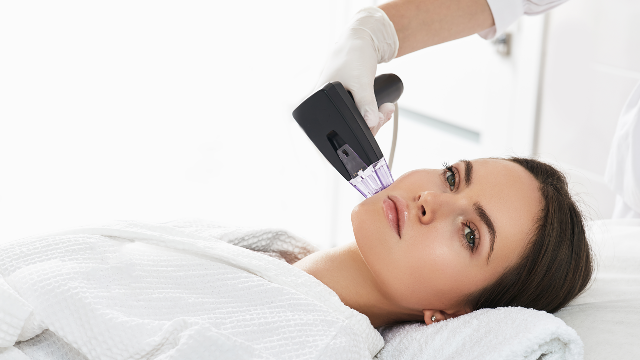
XERF Skin Tightening Korea: Dual Radiofrequency Depth
XERF skin tightening in Korea uses two monopolar radiofrequencies at 6.78 MHz and 2 MHz with three-stage depth control. How it works at TAE in Busan.
Learn More
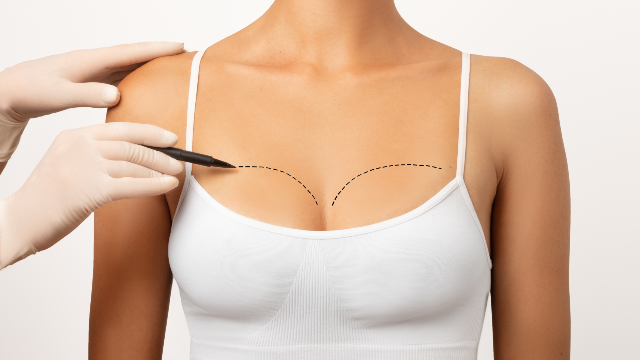
Trinity Breast Surgery Korea: A Combination Approach
Trinity Breast Surgery at TAE Plastic Surgery Clinic combines customized implant selection with fat transplantation and contouring in one surgical plan.
Learn More

Skin Booster Korea: Matching the Booster to Your Skin
Skin booster Korea explained: how boosters differ from fillers, what the DoubleTite RF-plus-booster approach involves, and how the product is selected.
Learn More