Personalized Medical Care & Dedicated International Patient Concierge


Medical Guide
NP Profound vs Surgical Facelift: Who Is a Candidate
Where energy-based lifting stops and surgery starts: the laxity threshold, the recovery difference, and how candidacy for each is decided at examination.
Schedule a ConsultationNP Profound vs Surgical Facelift: Who Each One Suits
Medically reviewed by Dr. Kim Ki-Tae, Board-Certified Specialist in Plastic Surgery, issued by the Korean Society of Plastic and Reconstructive Surgeons
Device marketing in this category tends to overpromise, and patients have learned to be suspicious of it. So it is worth starting from the opposite end: there is a degree of facial laxity beyond which an energy-based treatment will not give you what you want, and knowing roughly where that line sits is more useful than any comparison of specifications. TAE Plastic Surgery Clinic offers NP Profound within its facial lifting range, and this article sets out its stated candidacy, its stated limits, and what independent sources say about the surgical alternative.
Two different kinds of intervention
An energy-based lifting treatment works on tissue you already have, prompting it to change over weeks and months. Nothing is cut away and nothing is moved from one place to another. What improves is firmness and the quality of support within the tissue.
An operation does something categorically different: it repositions tissue and takes away what is in excess. Cervicofacial rhytidectomy, in the account given by the peer-reviewed reference StatPearls on the Bookshelf platform of the National Center for Biotechnology Information, is a family of defined anatomic techniques rather than one procedure, and which technique applies is settled at examination — a helpful way to hold it in mind. "Facelift" names a category of operations, and which one applies is a finding rather than a preference.
Because these are different kinds of intervention, the question is not which is stronger. It is which one your face is a candidate for.
What NP Profound is, and who it suits
The clinic describes NP Profound as an energy-based lifting treatment that uses fine needles to deliver radiofrequency energy into the deeper layers of the skin, aimed at improving firmness and laxity and at encouraging collagen and elastin remodeling. Its account of the mechanism is controlled heating delivered at a set depth inside the dermis, which prompts the skin's own repair response over the following weeks.
Its stated candidates are adults whose skin laxity sits in the mild-to-moderate band, whose firmness has reduced, or who have fine lines or the early stages of facial aging and would prefer an energy-based route to an operation, provided expectations are realistic and skin and tissue quality are sufficient. Elsewhere the clinic extends that list to wrinkles, jowls, neck laxity and crepey skin, still within the mild-to-moderate band.
The session runs to a recognizable sequence: consultation and facial assessment, marking of the treatment areas, cleansing and disinfection, topical or local anesthesia as appropriate, positioning of the microneedles, delivery of the radiofrequency energy at the target depth, repositioning until the planned areas are covered, then cooling and post-treatment instructions. The clinic positions it as a lifting treatment rather than a conventional superficial radiofrequency treatment, emphasizing delivery into the deeper layer.
Treatment may need to be postponed for active skin infection, significant inflammation, poor wound healing, an active inflammatory skin disorder in the treatment area, or other medical conditions affecting healing — and the clinic states that a medical assessment comes first.
What a facelift addresses
The American Society of Plastic Surgeons, which publishes patient guidance for people weighing surgery in the United States, describes rhytidectomy as surgery addressing the visible changes of aging across the face and neck, and attributes those changes to a mix of thinning skin, lost facial fat, gravity, sun damage, smoking, heredity and stress. It notes that the operation is frequently planned alongside other procedures — a brow lift or eyelid surgery for the eye area, fat transfer or fillers where fatty volume has been lost, and skin treatments such as intense pulsed light, dermabrasion, peels or laser to improve the quality and texture of the skin itself.
That list is instructive. Surgery repositions and removes; it does not by itself improve pigmentation, texture or lost volume, which is why those other treatments sit beside it rather than being displaced by it.
The society is equally clear about what surgery does not do. It describes the operation as restorative: it does not alter your fundamental appearance, and time continues to pass afterwards as before. It also cautions that some minimally invasive treatments marketed under a stem-cell label are of unproven benefit — a useful corrective in a field where new names appear faster than evidence does.
The threshold
Now the line itself. The clinic's own statement of realistic results for NP Profound is that patients should expect gradual improvement in skin firmness, wrinkles, jowls and laxity rather than a transformation at the level of a surgical facelift, with outcomes varying by age, skin condition, degree of laxity and individual healing.
From the other side, the society is categorical: a facelift happens in an operating room or not at all, and the gentler options — valuable as they are for delaying that day, and for improving what an operation leaves behind — do not produce the same outcome.
Put those two statements beside each other and the threshold is reasonably clear. Mild to moderate laxity with reasonable tissue quality is the stated territory of the energy treatment. Established descent, pronounced jowling and genuine skin excess are a surgical discussion. A patient in the second group who chooses the first will have spent a recovery on a result that was never available to the technology.
Nobody should have to guess which group they are in, and the clinic's answer is that this is determined by examination.
Recovery, and why it matters more than patients expect
The clinic is unusually frank about recovery from the needle-based treatment. It states that recovery is generally longer than with non-needle radiofrequency because the microneedles penetrate the skin: swelling and bruising can be noticeable for several days, some patients need approximately a week or more before the treated area looks substantially settled, and bruising can persist for about one to two weeks. Common effects include swelling, redness, tenderness, bruising, temporary sensitivity, pinpoint treatment marks and a tight or firm sensation.
That is real downtime for a non-surgical treatment, and it deserves to be stated before booking rather than discovered afterwards. It is still, of course, a different order of magnitude from surgical recovery.
Aftercare is straightforward: gentle cleansing, no unnecessary touching or rubbing, avoidance of excessive heat, alcohol, harsh skincare and strenuous activity during early healing, and protection from sun exposure.
Risks on the device side
The clinic's risk list for the treatment covers uneven results, burns, scarring, changes in pigment, infection, numbness that passes, and swelling or bruising that outstays its welcome — how much risk any one patient carries depends on the settings used, the state of the skin, and the technique. None of that is unusual for energy delivered through the skin, and all of it is worth weighing against an outcome the clinic describes as gradual rather than dramatic.
What "results" means on each side
For the energy treatment, the clinic describes some tightening becoming noticeable after the initial recovery period, with more meaningful improvement developing gradually as remodeling occurs, continuing for several months and in some patients for up to a year. That slow curve is the honest shape of the result, and it is the reason a single early photograph tells you very little.
Surgery follows a different curve: a structural change present from the outset, revealed as swelling resolves.
The distinction matters for anyone planning around a date. A patient six weeks from an event is choosing differently from a patient with a year in hand, and neither choice is wrong.
Some of what looks like sagging is not
One more distinction saves a lot of disappointment. MedlinePlus, run by the National Library of Medicine for patients, notes that aging skin sheds fat and thins, that sunlight is a leading driver of the change, and that wrinkling rises in proportion to how heavily and how long someone has smoked.
Lost volume is not laxity, and sun damage is not laxity either. The society's guidance on laser skin resurfacing covers the surface and pigment problems, and its material on injectable fillers covers replacement of lost fatty volume. A patient whose real problem is any of these will not be satisfied by a lifting treatment of either kind, however well it is performed — which is precisely why the examination comes before the recommendation.
How candidacy is decided here
The clinic's process is an assessment of the face rather than a menu selection: the degree and distribution of laxity, tissue quality, medical history and what the patient is actually trying to change. Its published approach to planning is individualized rather than protocol-driven, and its stated position on the energy treatment is that patients with more advanced laxity may be better served by a surgical discussion.
If you want that assessment for your own face, it starts at the clinic's booking and questions page; how the practice itself is set up is described on its practice overview page.
The Bottom Line
- The clinic's stated territory for NP Profound is mild to moderate laxity with sufficient tissue quality; advanced laxity is a surgical discussion.
- The clinic states the realistic outcome as gradual improvement in firmness, wrinkles, jowls and laxity rather than a transformation at surgical level.
- The American Society of Plastic Surgeons states that a facelift happens surgically or not at all, and that gentler options may delay that day without matching the outcome.
- Recovery from the needle-based treatment is longer than most patients expect: several days of swelling and bruising, sometimes a week or more, with bruising lasting up to two weeks.
- Volume loss, pigmentation and sun damage are separate problems from laxity, and lifting treatments of either kind do not address them.
Frequently Asked Questions
Am I a candidate for NP Profound?
The clinic describes suitable candidates as adults with laxity in the mild-to-moderate band, softening firmness, fine lines, jowls, neck laxity or crepey skin, who hold realistic expectations, have enough skin and tissue quality, and would prefer an energy-based route to an operation. Candidacy is confirmed by examination rather than from a description.
How do I know if my laxity is too advanced for a device?
That is an examination finding. The clinic's stated position is that patients with more advanced laxity may be better served by a surgical discussion, and its realistic-results statement is explicit that the treatment produces gradual improvement rather than a transformation at surgical level.
How much downtime is there?
More than for a non-needle radiofrequency treatment, because the microneedles penetrate the skin. The clinic states that swelling and bruising can be noticeable for several days, that some patients need about a week or more before the area looks substantially settled, and that bruising can persist for about one to two weeks.
How long until I see the result?
Some tightening may be noticeable after the initial recovery period, with more meaningful improvement developing gradually as remodeling occurs. The clinic states that change continues for several months and, in some patients, for up to a year.
What are the risks?
Uneven results, burns, scarring, pigment change, infection, numbness that passes, and swelling or bruising that lingers are all on the clinic's list, and how much of that risk applies to you depends on the settings, the state of your skin, and the technique. Short-term effects commonly include swelling, redness, tenderness, bruising and pinpoint treatment marks.
What anesthesia is used?
The clinic states that the treatment is typically performed under topical or local anesthesia, with the exact approach confirmed at consultation. Patients may still feel pressure, warmth or brief sensations during treatment.
Will a device treatment delay the need for surgery?
The American Society of Plastic Surgeons states that gentler rejuvenation treatments may put off the day a facelift becomes appropriate and can improve what an operation leaves behind, while not producing the same outcome themselves. The clinic's framing is consistent with that.
Who should postpone treatment?
Anyone with active skin infection, significant inflammation, an active inflammatory skin disorder in the treatment area, poor wound healing or other medical conditions affecting healing. The clinic requires a medical assessment before treatment in all cases.
This article is for general informational purposes and does not constitute individualized medical advice, and it is not a self-diagnosis tool. The treatments described are delivered in the Republic of Korea under Korean medical licensure rather than United States licensure. Speak with a qualified plastic surgeon about your own degree of laxity, your medical history and your expectations before making any treatment decision.
More Articles
Continue reading our clinical guides.
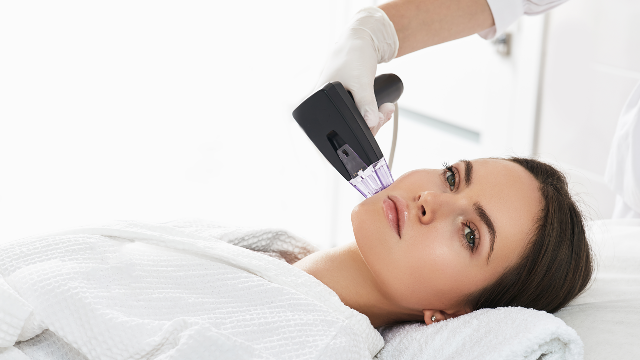
XERF Skin Tightening Korea: Dual Radiofrequency Depth
XERF skin tightening in Korea uses two monopolar radiofrequencies at 6.78 MHz and 2 MHz with three-stage depth control. How it works at TAE in Busan.
Learn More
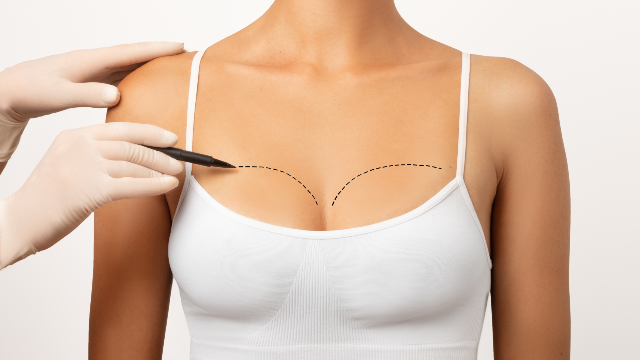
Trinity Breast Surgery Korea: A Combination Approach
Trinity Breast Surgery at TAE Plastic Surgery Clinic combines customized implant selection with fat transplantation and contouring in one surgical plan.
Learn More
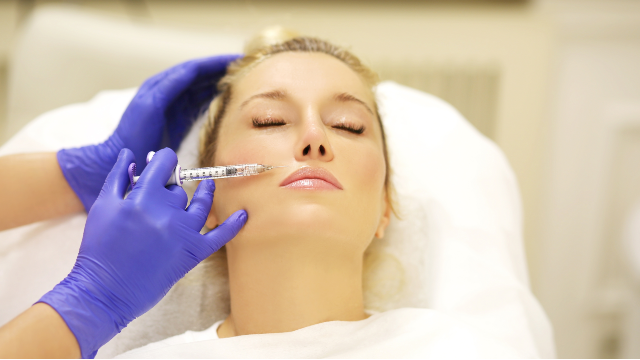
Skin Booster Korea: Matching the Booster to Your Skin
Skin booster Korea explained: how boosters differ from fillers, what the DoubleTite RF-plus-booster approach involves, and how the product is selected.
Learn More